There are five basic types and techniques of animation
- Traditional animation
- 2D Vector based animation
- 3D computer animation
- Motion graphics
- Stop motion
Traditional Animator (2D, Cel, Hand Drawn)
Traditional animation, sometimes referred to as cel animation, is one of the older forms of animation, in it the animator draws every frame to create the animation sequence. Just like they used to do in the old days of Disney. If you’ve ever had one of those flip-books when you were a kid, you’ll know what I mean. Sequential drawings screened quickly one after another create the illusion of movement
History

The techniques of animation that we are more familiar with, however, first appeared in 1650 as The Magic Lantern, by the Venetian inventor Giovanni Fontana. Whether or not he truly is the inventor is still highly debated. A simple lantern with a strip of animation sliding past a crude lens, illuminated by a single candle, was the humankind’s first introduction to projection. Which was primarily used to scare people witless with images of devilish creatures running on the wall, and generally play on people’s superstitions.
2D Animation (Vector Based)
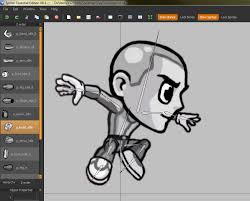
This style has become very popular in the last decade with the increasing amount of people doing it due to the accessibility of the technology. Flash is cheap and easy to use. Such are other vector based animation programs. 2D animation can be done in After Effects too.
History
In the late 90’s, due to bandwidth restrictions, many artists started using Flash to distribute short (and very limited) animations on the web, which were usually very small in size.
That limitation gave Flash the mass appeal that made it such a huge success among independent artists and animators, which lasted to today.
Flash really skyrocketed in 2005 when it was purchased by Adobe. When YouTube started growing, it completely exploded, and today you can find thousands of Flash animations there.
The reason 2D was put in a separate category in a different category is that in addition to the option of animating frame by frame, an animator has the option of creating rigs for the characters and then moving the body parts individually instead of drawing the character over and over.
After Effects allows you to create complex rigs for animation, or use the puppet tool to drag and move body parts of a drawn character.
3D Animation (CGI, Computer Animation)
3D animation works in a completely different way than traditional animation. They both require an understanding of the same principles of movement and composition, but the tecShnical skill set is very different for each task. while in the past you had to be an amazing draftsman to be an animator, with computer animation that is not the case. 3D animation is more similar to playing with puppets rather than drawing.
History
3D animation has definitely revolutionized how the animation industry looks today, and it was all started with Toy Story (1995, Lassetter.) Computer generated animations wasn’t completely new at the time, since it had already been often used in TV shows, movies and computer games, but Toy Story set the bar by being the first feature-length computer animation, leading to a whole new industry and market.
3D animation also lead to studios trying to achieve photo-realistic animations by combining high-level computer processing with advance motion-capture. This has led to films such as Final Fantasy: Spirits Within (2001, Sakaguchi) and The Polar Express (2004, Zemeckis), with very mixed results. This kind of animation became rarer as the decade passed, as the process is a lot more complicated than key framed 3D animations, but has passed on to feature film VFX.
Motion Graphics (Typography, Animated Logos)
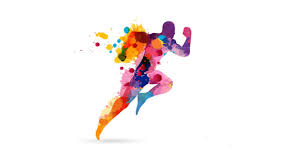
While still considered a form of animation, motion graphics is a rather different from the other types of animation. Mostly because unlike the other types on our list it is not character or story driven. It’s the art of creatively moving graphic elements or texts, usually for commercial or promotional purposes.
History
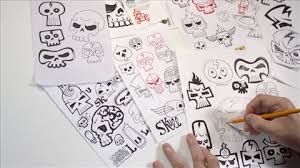
The term Motion Graphics came about computer based video editing, as programs like Adobe After Effects and Apple Motion made editing images definitely a lot more easier, since previously, before the advent of computer editing, it was a very time-consuming process, which made it limited for high-budget productions, but in present time it is highly popular for commercials, news shows and internet video
Stop Motion (Claymation, Cut-Outs)
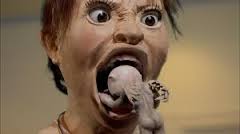
Stop motion is done by taking a photo of an object, and then moving it just a little bit and taking another photo. The process is repeated and when the photos are played back one after another they give the illusion of movement. This is similar to traditional animation but it uses real life materials instead of drawings.
History
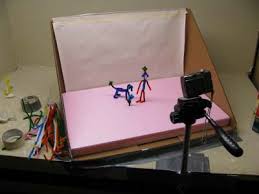
Stop-Motion animation was very often used as special effects before the introduction of CGI animation, and as such has a very long history in both the animation and film industry, starting from The Humpty Dumpty Circus (1887, Blackton.) One of the most earliest of clay animations was Modelling Extraordinary (1912), and Stop-Motion animation also created the first female animator, Helena Smith Dayton, who made a clay animated short based Romeo and Juliet in 1917.
Another technique, which came about in the 80’s, was Go Motion. This technique involved programming a computer to move the models for the animators before each frame was photographed. It was used when creating visual effects for RoboCop (1987, Verhoven) and The Empire Strikes Back (1980, Kershner.) It was a lot more complicated than doing it by hand, but the result was a more realistic looking animation.
 hondamotors.sport.blog